Disclosure: This article contains affiliate links. If you buy through these links, we may earn a commission at no extra cost to you.
If you are a CTO, security lead, or technical founder managing crypto exposure, the right question is not “which wallet is popular,” it is “which custody setup reduces catastrophic key risk without breaking operations.”
For that standard, Ledger Nano S Plus is a practical baseline for teams and builders handling Bitcoin and ApeChain assets in a pre-production-to-production growth path.
Executive Answer
Ledger Nano S Plus is a strong hardware-wallet choice when your priorities are offline private key control, deterministic signing on a physical device, and operational discipline around treasury and deployment wallets.
It does not remove risk by itself. It enforces better security behavior when your process is solid.
Why This Matters for Bitcoin
Bitcoin custody is binary: if keys leak, funds are gone. Ledger Nano S Plus keeps keys off internet-connected hosts and requires physical confirmation for transaction approval.
From a CTO lens, this lowers remote compromise surface compared with software-only wallet flows, especially on machines used for daily development and browsing.
Why This Matters for ApeChain Workflows
ApeChain builders and participants often split activity between ecosystem operations, marketplace interactions, and long-term holds. Hardware-wallet discipline helps separate long-term treasury custody, operational wallets, and test/staging wallets.
Ledger Nano S Plus is useful in this model as the secure anchor tier, while smaller hot wallets can handle higher-frequency actions with limited balances.
CTO Security Architecture (Recommended)
- Cold tier: Ledger Nano S Plus for long-term reserves.
- Warm tier: limited-balance operational wallet for routine transactions.
- Hot tier: disposable dev/test wallets with strict limits.
- Governance: documented signing policy and dual-review for high-value sends.
Technical Setup Checklist
- Buy only via official Ledger links.
- Initialize device offline in a controlled environment.
- Record recovery phrase on physical media only.
- Validate firmware and Ledger Live authenticity before first transfer.
- Run a small inbound/outbound test transaction.
- No large transfer without on-device address verification.
Common Failure Modes (and How to Prevent Them)
- Seed phrase exposure in cloud notes: never digitize it.
- Phishing signing flows: verify destination on device screen.
- Wallet role confusion: separate treasury from active ops wallets.
- Team key-person risk: document recovery and emergency procedures.
Affiliate Access
If this setup matches your security posture, use the direct affiliate link:
https://shop.ledger.com/?r=76317fc376a8
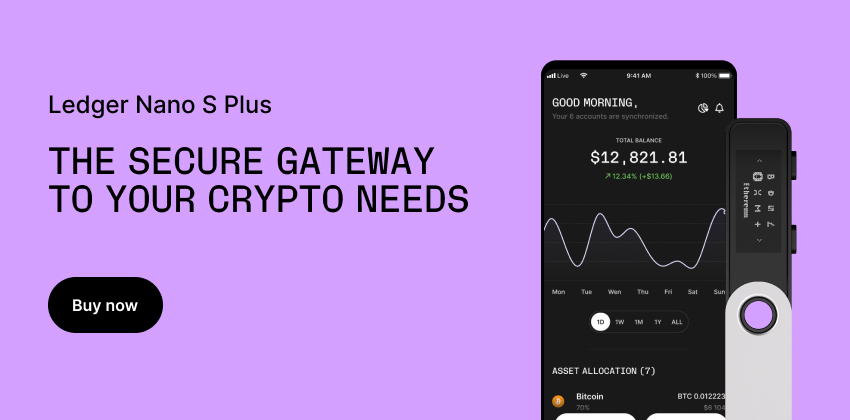
Banner for Ledger-related posts:

Spin-Off Framework for Other Ledger Models
- Model-specific technical differences.
- CTO risk-fit and operating profile.
- Bitcoin and ApeChain role mapping.
- Setup checklist deltas.
- Banner and affiliate CTA block.
Final CTO Take
Ledger Nano S Plus is not a marketing upgrade; it is a control-layer decision. For Bitcoin and ApeChain participants who want real custody discipline, it is a credible core component of a tiered wallet architecture.